 Skip to content
Beyond Snow and Santa: The True Spirit of Christmas in Africa

Christmas in Africa: Faith, Family, and the Spirit of Community Christmas in Africa is more than a holiday—it’s a celebration of faith, family, and culture that captures the soul of the continent. Unlike the Western focus on snow and shopping, African Christmases are marked by togetherness, music, and joy. Cities empty as people return to their ancestral homes, reconnecting with family and community in a spirit of ubuntu—“I am because we are.” From village squares to city churches, the atmosphere is electric with laughter, dance, and prayer. Midnight church services stretch into the night, filled with drumming, choirs, and jubilant praise echoing through warm December air. Food as a Symbol of Abundance and Belonging Food sits at the heart of Christmas celebrations across Africa, serving as a symbol of connection, generosity, and shared joy. Every country brings its own flavor to the table. Ghana’s smoky jollof rice and spicy goat stew, Nigeria’s pounded yam and egusi soup, Kenya’s grilled nyama choma, and South Africa’s summer braai are prepared and shared freely. These meals are enjoyed with neighbors, friends, and even strangers—rooted in the belief that no one should be excluded from the celebration. Gifts may be simple, but they carry deep meaning because they are given from the heart. Color, Culture, and a Different Kind of Christmas The season’s beauty shines through color and fashion. Families dress in their finest kente, Ankara, and kaftans, transforming Christmas morning into a vibrant display of pride and gratitude. The warmth of the sun mirrors the warmth of the people, reinforcing that Christmas in Africa is not about cold weather or consumerism, but about love, music, and belonging. It is a time when the continent’s spirit radiates brightest—proof that the truest celebration of Christmas lives in community and culture.
Africa’s Game, Africa’s Time: The 2025 Africa Basketball Festival Brings Culture, Competition, and Connection to Ghana

Experience the Africa Basketball Festival 2025 in Ghana — where basketball, culture, and travel collide. Join Sankofa Travels for Africa’s sports revolution.
Africa Is the Future of Travel: How Sankofa Travels with Kofi Is Leading the Continent’s Tourism Revolution

Africa’s tourism industry is experiencing record-breaking growth in 2025, outpacing every other region in the world. From Morocco’s cultural expansion to South Africa’s safari resurgence, the continent is redefining global travel. Sankofa Travels with Kofi goes beyond sightseeing — connecting the African diaspora through authentic, heritage-based experiences that bridge culture, history, and purpose.
Faith, Power, and Oil: The Real Story Behind Trump’s Threat to Nigeria

Donald Trump’s threat of U.S. military action in Nigeria reveals deeper motives—faith, oil, and power. Sankofa Travels explores what’s really at stake.
No Visa, No Problem: Why Kenya’s 2025 Policy Is Big News for Heritage Travelers

No Visa, No Problem: Why Kenya’s 2025 Policy Is Big News for Heritage Travelers Kenya just made traveling across Africa a lot easier. Starting in 2025, citizens from most African countries — including South Africa, Namibia, Seychelles, Gambia, Uganda, and Zambia — can visit Kenya visa-free for up to 90 days. It’s a huge win for African tourism and for travelers ready to explore the continent. For Sankofa Travels, this is great news. Our mission has always been to reconnect the African diaspora to the continent through cultural exchange, heritage tourism, and authentic local experiences. With Kenya’s new visa-free policy, it’s easier than ever to plan your dream trip — from the Maasai Mara and Nairobi’s vibrant art scene to the beaches of Mombasa. This reform supports our vision of making intra-African travel more accessible, inspiring more people of African descent to explore the motherland. Fewer visa hurdles mean less planning stress, lower costs, and more spontaneous travel. Sankofa Travels can now craft even smoother itineraries that combine Kenya with neighboring countries for immersive, multi-country adventures. Imagine a journey that takes you from the savannas of Kenya to the Serengeti in Tanzania or the shores of Zanzibar — all seamlessly connected and culturally rich. “Experience Africa without borders — where every journey connects you to culture, community, and history.” If you’ve been dreaming of visiting Africa, now’s the perfect time. Book your Kenya 2025 tour with Sankofa Travels — and let your heritage guide your next adventure.
Film Africa 2025: Celebrating the Future of African Cinema

Discover Film Africa 2025 in London — a vibrant festival of African cinema and storytelling. Join Sankofa Travels in celebrating culture, creativity, and connection!
Kente Cloth Officially Protected as Ghana’s Cultural Crown Jewel

Kente Cloth Officially Protected as Ghana’s Cultural Crown Jewel Kente Cloth Officially Protected as Ghana’s Cultural Crown Jewel At Sankofa Travels with Kofi, we believe that understanding culture means honoring its origins — the people, the places, and the stories behind every symbol. That’s why Ghana’s latest cultural milestone is worth celebrating. The government has officially granted Kente cloth Geographical Indication (GI) status, meaning that only cloth woven in Ghana can be legally recognized and sold as authentic Kente. This isn’t just a bureaucratic win; it’s a triumph of heritage, pride, and protection for one of Africa’s most powerful cultural icons. Kente is more than a pattern of bright colors and geometric shapes. It’s a language of its own — one that speaks of ancestry, leadership, unity, and resilience. The threads are handwoven with meaning, each design carrying stories that have been passed down through generations. Now, with its GI protection, Ghana has ensured that these stories remain rooted where they began. The designation, announced at La-Palm Royal Beach Hotel in Accra in collaboration with the World Intellectual Property Organization, follows years of effort from Ghana’s cultural and creative arts leaders. It builds on an earlier honor: Kente’s inclusion on UNESCO’s Representative List of Intangible Cultural Heritage. Together, these recognitions cement Kente’s place not only in history books but in the global consciousness as an authentic expression of Ghanaian identity. For local artisans, this protection is about survival and dignity. Weavers from Bonwire and Adanwomase — the ancestral homes of Kente — have long seen their artistry replicated in cheap knockoffs abroad. GI status helps preserve the value of their work, ensuring that when someone wears Kente, they’re not just wearing a fabric but supporting the living heritage of the people who create it. This recognition also underscores Ghana’s growing role in shaping global cultural diplomacy. Just as Champagne represents France or Tequila represents Mexico, Kente now officially represents Ghana — a nation whose creativity and craftsmanship continue to inspire the world. It’s a statement that African culture deserves the same legal respect and global acknowledgment as any other. Still, much of the work ahead lies in implementation: enforcing the standards, raising awareness among buyers, and supporting small-scale weavers to thrive within this new framework. But for now, the moment is one of celebration — a victory woven from threads of persistence and pride. At Sankofa Travels with Kofi, we invite travelers to experience this heritage firsthand. During our cultural tours, guests can visit Kente weaving villages, meet the artisans who keep these traditions alive, and even learn to weave a small piece of cloth themselves. Standing beside the looms, hearing the rhythmic clack of the shuttles, and watching colors come to life thread by thread is a reminder that culture isn’t static — it’s living, breathing, and beautiful. Kente’s new legal recognition reminds us that heritage is something worth protecting, not just remembering. It’s a powerful affirmation of identity — and an invitation for the world to learn, connect, and celebrate responsibly.
Trekking with Giants: The Promise & Peril of Gorilla Tourism

Trekking with Giants: The Promise & Peril of Gorilla Tourism World Gorilla Day: Celebrating Our Big, Furry Cousins Every year on September 24, the world marks World Gorilla Day, a time to celebrate our big, furry cousins who share almost 98 percent of our DNA. That’s right—genetically speaking, gorillas are closer to us than your second cousin who still owes you money. In Uganda, Rwanda, and the Democratic Republic of the Congo, tourists hike into misty forests to meet gorillas face-to-face, and for many, it’s the kind of bucket-list experience that beats out swimming with dolphins or trying—and failing—to surf in Bali. But behind the magic of the encounter lies a complex story of conservation, economics, and yes, the occasional gorilla side-eye when humans get too close. The Pull of Gorilla Tourism The pull of gorilla tourism is easy to understand. Imagine trekking through tangled jungle trails, sweating buckets, wondering if that sound in the bushes is a gorilla or just your stomach growling from skipping breakfast. Then suddenly, there they are—a family of gorillas lounging around like it’s Sunday afternoon. The silverback, built like a linebacker, keeps a watchful eye, while the babies wrestle and roll around, completely ignoring your presence. It’s hard not to feel like you’ve wandered into the gorilla version of a reality TV show. And on the flip side, these treks aren’t just about Instagram bragging rights—they’re also a major source of funding for conservation and local communities. Tourists’ dollars help pay for ranger patrols, schools, and jobs that give locals every reason to protect gorillas instead of, well, competing with them for land. The Risks and Realities Gorillas are incredibly susceptible to human illnesses. A simple cold for us could be life-threatening for them. Tourists are told to stay several meters away, even though gorillas don’t always respect personal space. Tempting as it may be, this isn’t the moment for a gorilla selfie—think of it like flu season etiquette. Concerns About Long-Term Impact Dian Fossey’s Warning: “Tourism might change how gorillas act, making them too comfortable around people or disrupting their natural routines.” Too many tourists can stress gorillas, change their feeding habits, and turn trails into rush hour. Strict rules limit how many people can see gorillas each day and how long they can stay. Conservation Success Story Despite the risks, gorilla tourism has become one of conservation’s unlikely success stories. When managed carefully, it funds protection efforts, supports local economies, and raises global awareness about these gentle giants. But the balance is delicate. Visitors need to follow the rules, wear masks when required, and remember that the experience is about gorilla survival, not human entertainment. Think of yourself less as a star of the show and more as a respectful guest—because let’s face it, the gorillas are the real celebrities here. Looking Ahead The future of gorilla tourism will depend on whether we keep that balance. It’s a paradox: the very thing that saves gorillas could also harm them if not handled with care. If we get it right, these treks will continue to inspire, educate, and fund protection for decades to come. If we get it wrong, we’ll be left with only stories and photographs of what once was. On World Gorilla Day, the message is clear: if you’re lucky enough to trek with giants, laugh at the muddy boots, marvel at the hairy cousins, and remember that their survival—not our selfies—is the prize worth protecting.
Top 5 Safaris in Africa You Need on Your Bucket List
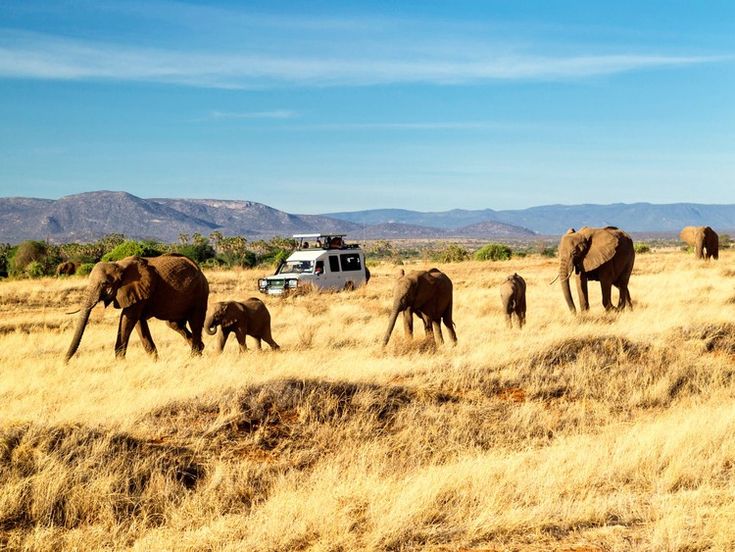
Top 5 Safaris in Africa You Need on Your Bucket List When people say “once in a lifetime trip,” they’re probably talking about an African safari. Forget the zoo — this is the real deal. Elephants crossing right in front of your Jeep, lions side-eyeing you like you’re on their turf, and sunsets so dramatic you’ll wonder if Mother Nature hired a lighting crew. If you’ve ever dreamed of a safari in Africa, these are the top five spots you absolutely need to experience. 1. Serengeti National Park – Tanzania If safaris had a headliner, the Serengeti would be Beyoncé. The Serengeti safari is best known for the Great Migration — a mind-blowing event where over 1.5 million wildebeest, zebras, and gazelles stampede across the plains. Imagine rush hour traffic… but with horns. Add in lions, cheetahs, and crocodiles chasing dinner, and you’ve basically got a live-action National Geographic special. This is hands down one of the best safaris in Africa for pure drama. 2. Maasai Mara – Kenya Kenya’s Maasai Mara is the Serengeti’s equally fabulous sibling. The two parks connect, but the Maasai Mara safari is where you’ll find insane big cat action. Lions, leopards, and cheetahs strut around like they own the place (spoiler: they do). The golden grasslands are picture-perfect, and spotting the iconic Maasai people in their bright shúkà adds cultural richness to your adventure. This is why the Maasai Mara safari in Kenya consistently makes it onto every traveler’s top list. 3. Kruger National Park – South Africa If you’re looking for the most accessible safari in Africa, Kruger is your spot. It’s huge, it’s easy to get to, and it’s got the Big Five — lion, leopard, rhino, elephant, and buffalo — all in one park. The beauty of a Kruger safari is the flexibility. You can go luxe with 5-star lodges or keep it budget-friendly with self-drive safaris. Either way, you’re pretty much guaranteed brag-worthy wildlife sightings. Kruger is like the all-inclusive resort of the safari world — except instead of poolside DJs, you get elephants at the watering hole. 4. Okavango Delta – Botswana The Okavango Delta safari in Botswana flips the script. Instead of dusty roads, you’re floating in a traditional mokoro canoe through winding channels of water, surrounded by elephants, hippos, and exotic birds. It’s a water safari unlike anywhere else on Earth. A UNESCO World Heritage site, the Delta is an oasis smack in the middle of the Kalahari Desert. Think Venice, but replace gondolas with dugout canoes and Italian opera with hippos grunting at you. 5. Ngorongoro Crater – Tanzania Welcome to the Ngorongoro Crater safari, aka “Africa’s Garden of Eden.” This massive volcanic caldera is packed with wildlife — lions, rhinos, flamingos, hyenas, you name it. It feels like nature built an arena and filled it with every animal you came to see, all hanging out in one convenient spot. No FOMO here — you’ll see it all in one day. Just remember: in Eden, the snake was tiny. Here, it might be longer than your Jeep. Final Roar Whether you’re chasing the Great Migration in Tanzania, cruising the Okavango Delta in Botswana, or playing “spot the leopard” in South Africa’s Kruger National Park, these are the best safaris in Africa to put at the top of your list. Each one offers a unique flavor — drama, luxury, water adventures, or sheer concentration of wildlife. So grab your binoculars, ditch the all-khaki outfit, and let’s get you on safari with Sankofa Travels.
Tutu’s New Dawn: A Celebration of Living Heritage

On 8 September 2025, Ghana’s historic town of Tutu in the Eastern Region unveiled the “Tutu Wɔ Bi Ka” Heritage Centre, a groundbreaking initiative and centerpiece of the Unfolding Cultural Heritage (UCH) project.
